TL;DR
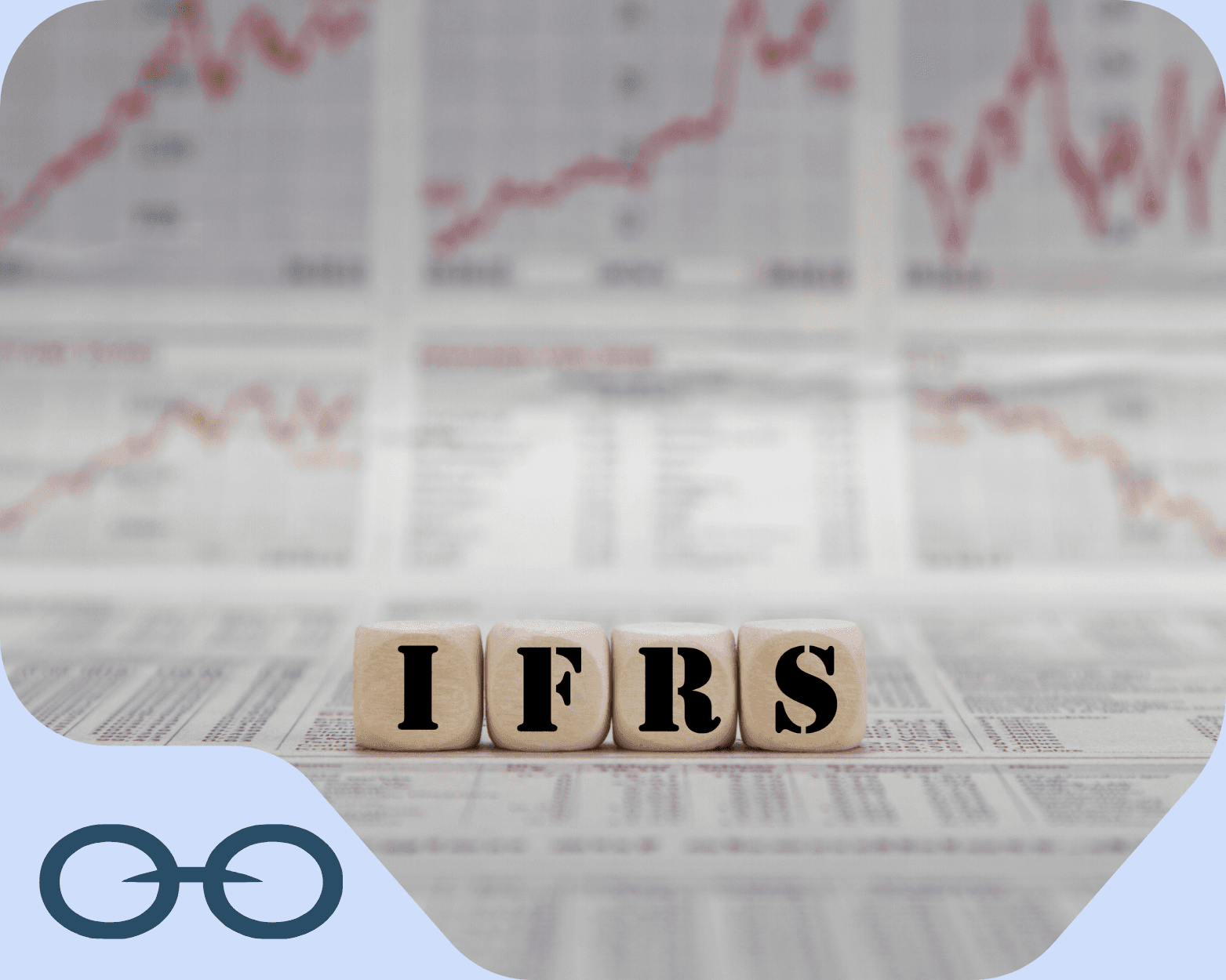
IFRS provides a global accounting framework used to produce consistent and comparable financial statements.
Sustainability is now integrated into the IFRS ecosystem via IFRS S1 (aligned with SASB) and IFRS S2 (aligned with TCFD).
As of December 2025, 17 jurisdictions have confirmed adoption of S1/S2, and 36 are actively preparing or aligning.
IFRS: A Global Accounting Language
The International Financial Reporting Standards (IFRS) allow companies to prepare financial statements, including balance sheets, income statements, and cash flow statements, in a consistent and reliable way worldwide.
Developed by the International Accounting Standards Board (IASB) under the IFRS Foundation, IFRS promotes transparency, comparability, and investor trust in global markets.
Establishment of the ISSB
In response to growing investor and regulatory demand for consistent sustainability reporting, the IFRS Foundation established the International Sustainability Standards Board (ISSB) in 2021 as a sister board to the IASB. The ISSB was set up to create a single global baseline for sustainability-related financial disclosures, building on and consolidating major existing frameworks. It works alongside the IASB to ensure “connectivity” between sustainability disclosures and financial statements, so companies and capital markets can see how sustainability issues affect enterprise value.
IFRS S1 & S2: Integrating Sustainability into Reporting
The International Sustainability Standards Board (ISSB) developed IFRS S1 and S2 to integrate ESG considerations into mainstream financial reporting.
Standard | Based On | Focus |
IFRS S1 | SASB | General sustainability disclosures covering all material ESG topics affecting financial performance. |
IFRS S2 | TCFD | Climate-related disclosures, including emissions, climate risks, and scenario analysis. |
Key feature: Both standards emphasize financial materiality; companies disclose sustainability issues only when they have a potential impact on enterprise value, financial performance, or risk exposure.
Global Adoption of IFRS S1 and S2: Current Status as of December, 2025
Many jurisdictions are now moving to use IFRS S1 and S2 (or very similar local standards) as the backbone of sustainability reporting, but with different speeds and scopes.
A first group (including Australia, Türkiye, Nigeria, Kenya, and more) has already finalised how ISSB‑based standards will sit in their regulatory systems, usually starting with large or listed entities and phasing in requirements over several years. These regimes are generally described as “ISSB‑aligned” or “based on IFRS S1/S2”, allowing for local tailoring and transition relief rather than automatic, identical application of the IFRS texts.
A second group of jurisdictions is still in the “snapshot” or consultation phase, where authorities have publicly signalled an intention to align with IFRS S1/S2 but are still designing or consulting on the detailed rules. In many of these markets, climate disclosures based on IFRS S2 are being prioritised first for listed or large entities, with broader S1‑type sustainability disclosures expected or considered later (such as Singapore, Canada, China, Japan, the UK, and more).
Across both groups, global momentum is strong: as of 2025, 36 jurisdictions have either committed to, or are actively preparing, adoption of ISSB standards, but only 17 have finalized their profiles. The exact scope, timing and the degree of “full” versus “partial” adoption still vary widely by country and are continuing to evolve.
Why Companies Adopt IFRS
Companies adopt IFRS for two main reasons:
Mandatory compliance: Many jurisdictions require IFRS for publicly listed companies.
Voluntary adoption: Some companies choose IFRS early to:
Enhance credibility with investors.
Prepare for cross-border investment or IPOs.
Align reporting with international standards.
Adoption improves transparency, comparability, and trust, making financial information more useful to investors and stakeholders.
Why This Matters Now
The adoption of the IFRS Sustainability Standards is accelerating, driven by investor demand for ESG data and regulatory requirements around sustainability. Climate and other sustainability risks are increasingly material, making transparency essential for long-term business resilience. Companies that adopt globally recognized standards demonstrate real progress, strengthen trust, and position themselves for sustainable growth.
IFRS may feel technical at first, but it forms the foundation for clear, comparable, and trusted reporting. As sustainability becomes inseparable from financial performance, IFRS now bridges both worlds, helping businesses communicate impact, strategy, and risk in a coherent and credible way.
Getting ready to prepare your IFRS sustainability disclosure? Check out ECO-OS's ESG Manager's IFRS Survival Guide for a printable calendar and checklists to keep you on track throughout the year.

Learn More

FAQs
Data security
We take data security very seriously. ECO-OS uses enterprise-grade security measures, including encryption, secure data storage, regular security audits, and compliance with leading industry standards. Your sensitive ESG data remains private, secure, and confidential at all times.
Do you provide implementation support?
Absolutely! Our professional services team is among the most talented and experienced in the business. They provide hands-on implementation support, systematically guiding your team every step of the way. From initial data discovery and onboarding of users to training and integration, our experts ensure your team rapidly closes gaps and creates new value with ECO-OS.
Do you also support Scope 3 reporting?
Of course. ECO-OS provides an end to end solution for Scope 3 emissions following the guidance of the GHG Protocol. A suite of tools unique to our platform simplifies the complex task of communicating, collecting and aggregating your supply chain data, helping you clearly understand your full value chain emissions and devise actionable reduction programs.
What international standards and frameworks are supported by ECO-OS?
ECO-OS supports alignment with major global ESG reporting frameworks, including CSRD, the GHG Protocol, California SB 253 and SB 261, the UN Global Compact, the UN SDGs, and other leading international standards.
Start Your Journey to Compliance and Growth Today